Forest
E Protecting Nature

- Transitioning Together to a Low-Carbon Future
- Advancing Circular and Resource-Responsible Manufacturing
- Safeguarding Water Resources for the Future


Vanachai creates long-term value through responsible wood-based products, circular manufacturing, low-carbon operation, and strong governance.
FOREST FUTURE TOGETHERFOR A SUSTAINABLE LIVING
“Protecting forests through responsible wood-based innovation for a lower-carbon future and more sustainable living.”
Reducing carbon, advancing circular manufacturing, and using resources responsibly to protect forest ecosystems.
Strengthening transparent governance, integrating risk and sustainability, and advancing digital trust and resilience.
Creating shared value with customers and communities, developing people, and ensuring safe workplaces through responsible products and services.

E Protecting Nature
E Governing with Integrity
G Growing Shared Value
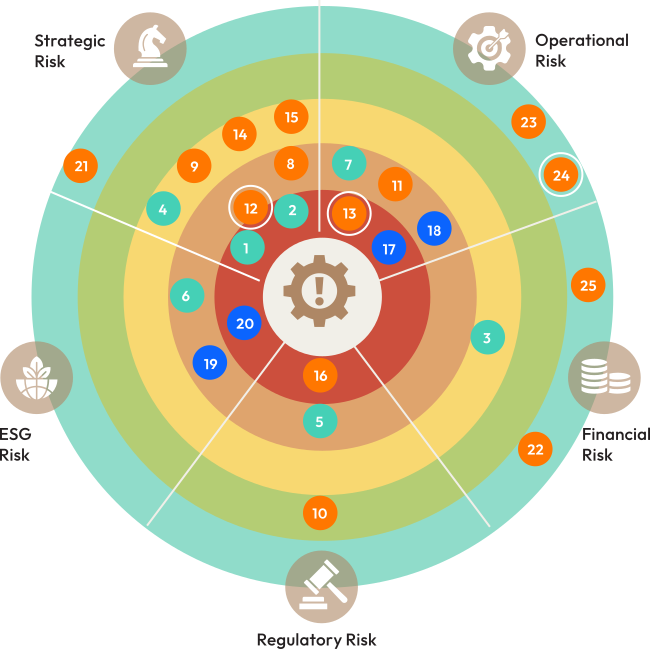
V-IMRA, or Vanachai Integrated Materiality and Risk Assessment, connects key ESG issues with enterprise risk management. It helps Vanachai identify, assess, and prioritize sustainability-related risks and opportunities, ensuring that ESG priorities are embedded into strategy, operations, and decision-making.
Vanachai is committed to achieving Net Zero greenhouse gas emissions by 2050, accelerated from the original 2055 target.
The Group drives this transition through climate strategy, measurable emissions reduction targets, low-carbon operations, and transparent performance tracking across the product life cycle and value chain.
Scroll horizontally to explore the roadmap.
Activities
prior to
manufacturing,
sales, and product distribution
Vanachai Group
Operations
The Group’s core
operational processes
Consumers,
furniture
manufacturers, project owners,
and end-of-life management
Apply GHG-reducing technology and fit-to-use product sizing to minimize waste.
Strictly screen wood-residue suppliers, no natural forest timber, prioritize low-GHG/low-pollution inputs.
Increase renewable electricity and heat, and drive zero-waste production.
Provide environmental and GHG data to support lower-impact material selection.
Use efficient fleets, deploy emissions-reduction tech, optimize deliveries.
Provide use and maintenance guidance to minimize waste and extend product life
Partner to scale take-back, reuse, and recycling solutions to reduce virgin resource demand

Innovation in wood-based materials, energy efficiency, and performance-driven product development.

Shared progress with employees, communities, customers, and investors through accountable governance.
Access sustainability reporting, ESG performance data, and governance disclosures presented in a download-first resource format designed for investors, partners, and stakeholders.
Vanachai’s new policy structure has been developed to enhance clarity, consistency, and accountability across the organization. Each policy clearly defines its purpose, scope, responsibilities, commitments, implementation approach, targets, indicators, and review process.
This structure enables directors, executives, employees, suppliers, contractors, business partners, and other relevant parties to understand their roles and apply the policies effectively in their work. It also supports better coordination, risk management, monitoring, and reporting.
Each policy will be reviewed at least every two years, or earlier when significant changes occur, to ensure continued relevance, effectiveness, and alignment with laws, regulations, business conditions, and stakeholder expectations.